Imagery to Fight: Revelation 16

by Sean Perron
by Sean Perron


Imagery to Fight

In life, the pressure is on. Trials, toils and snare abound for the believer. How will you fight against the intense temptations Satan will throw your way? Will you be able to endure until the end and be saved? Apocalyptic literature offers us some images to keep us in the faith.

Chapters 6-16 of Revelation contain many visions of judgment that are poured out upon the earth. The trumpet and bowl judgments are intense pictures of the wrath of God. While it is beyond the scope of this post to examine all the images in these chapters, this section will highlight a couple of images of Judgment and seek to apply them practically in counseling.

Revelation 16 can be used to provide powerful images in order to bring about repentance and to keep believers from falling into temptation. Revelation 16:2 says, “So the first angel went and poured out his bowl on the earth, and harmful and painful sores came upon the people who bore the mark of the beast and worshiped its image.” This verse gives a descriptive picture of what will happen to all of those who follow the way of Satan instead of the way of Christ. Every person who gives way to the persuasion of sin is described in this text. Those who have obtained the mark of the beast have given themselves over to sin and disobedience.

The image of a bowl that spreads sores and painful diseases is an unpleasant thought. This is an example of apocalyptic literature exposing the façade of sin. The bowls in Revelation are bowls of wrath. They are bowls filled with the fury of God. We do not want these bowls poured on our heads anymore than we want scalding hot water to be dumped on our backs. Romans 6:23 rightly says that “the wages of sin is death.” Revelation 16 gives readers a similar truth as in Romans 6:23 but it is delivered in a much more pungent manner.  This passage communicates that the wages of sin is full of infected sores. Sin brings God’s wrath and in this text God’s wrath manifests itself in painful sores. Imagine green pus filled boils covering your skin. These sores are a direct cause of sin. These are wages for the wicked on their way to death. We want God to anoint our heads with smooth oil, not sour sores.

The judgments continue to pour and Revelation 16:8 describes another bowl of wrath that inflicts pain. “The fourth angel poured out his bowl on the sun, and it was allowed to scorch people with fire.” This imagery involves a giant bowl being held over the earth by a massive angel. This bowl is filled with liquid that is poured out to ignite the sun. When the liquid touches the sun, the sun intensifies and explodes the solar system with heat and light. All the enemies of God feel the intense heat on their skin and every exposed area becomes burnt. This bowl is another picture of the consequences of sin. Instead of infected sores, God releases heat from hell. In this text, the wages of sin is sun poisoning. All the enemies of God are burned before they can even march into battle. These are the same people who are gearing up for the battle against God at armageddon and they already have a foretaste of their defeat (Revelation 16:14-16). How foolish is the battle of armageddon? Creatures are planning to attack their Creator and cannot even conquer the sun! Sin is foolishness and will only result in misery. This imagery of splotchy red soldiers with burning red boils should be brought to our minds before giving into temptation. This should cause us to pause before partaking in sin.


How should we respond to judgment?

The interesting twist in Revelation 16 comes from the response of those under judgment. Instead of crying out for mercy from the wrath of God, they actually do the extreme opposite. 16:9 says, “They were scorched by the fierce heat, and they cursed the name of God who had power of these plagues. They did not repent and give him glory.” This is instructive for counseling on two levels.

First, this gives some insight into the depravity of man. Wicked hearts are blind to logic and this passage reveals this reality. The most illogical act in response to the bowl judgments would be to curse God. Yet the unbelievers go to great lengths to mount an attack plan against their Creator and wage war against him in 16:16. Armageddon is the apex of human folly. The creatures are attempting to attack the very one who sustains their existence. The image of Armageddon should be a clear call for counselors that many people respond to correction in the worst possible manner. It shows that sin is blinding and causes people to operate in illogical ways.

Second, these passages come as a warning to believers and unbelievers. These are examples of how not to respond to the discipline of God. Revelation 16:9 and 11 indicate that the proper response to the wrath of God is repentance. When faced with the judgment of God, humans should fall to their knees and beg for mercy. Fleshy boils and burns should cause the believer to wince at the harmful results of disobedience. When the imagination brings to mind the clamor of thousands of sun scorched soldiers at the battle of Armageddon, the foolishness of sin should be brought to mind. These images, and the emotions they invoke, can be a means of grace for persevering believers in holiness. This fresh vision of judgment may become your salvation.


This blog post is attempt to demonstrate the usefulness of apocalyptic imagery in discipleship and counseling. See Counseling Beasts and Imagery to Ignite for more. 

Four Chemicals for Christian Chemistry: How do you know who you should marry?


by Sean Perron
by Sean Perron


How should a Christian think about another Christian when it comes to a potential romance? Perhaps you are considering pursuing someone or allowing someone to pursue you. Although these categories are probably not exhaustive, they may be helpful as you think about a potential mate.


Four Chemicals for Christian Chemistry:


1. Character

It need not go without saying. When it comes to marriage, godly character is not just a deal breaker; it is what the game is all about. This is first on the list because without it nothing else matters. This is the sun all planets orbit around. The rings of Saturn don’t matter without Saturn. Without a deep love for Jesus, marriage will be miserable. The potential wife should be maturing into a Proverbs 31 woman and the potential husband should be a Psalm 112 man. It also should be noted that there is a difference between potential godliness and actual godliness. A wise man pointed out to me that potential godliness does not exist. It is simply “potential.” The person you are considering for marriage must have real visible godly character in order to qualify for the picking.

If you are a woman, you need a husband who is maturing in the faith in order to lead you closer to Jesus. Perfection is not required, but pursuit of holiness is mandatory. If you are a man, you should be seeking a woman who is already exhibiting love, compassion, wisdom and gentleness. Look for the girl who is already serving in your church and washing the feet of the saints. She will be a keeper. Questions to ask include the following: Do I want this man to teach my children the Scriptures? Do I want this woman to raise my children to love the Lord? Is this man a role model I want to follow? Is this lady someone who can show me more of God’s heart and push me closer to Christ?


2. Personality

Not everyone is meant to get along all the time. It is a sin to have ungodly character (1 Timothy 3) but it is not a sin to be socially incompatible. Perhaps you are an extrovert and can’t help but be the life of the party. You may or may not mesh with the introvert who loves to study instead of playing Quelf. If wakeboarding gives you a high and you are the president of the local rock climbing club, you might jump off a cliff if you marry someone who is content to never see sunlight. Then again, that kind of thing just might stoke your fire. To each his own. The point is that you need to marry someone you can have a happy conversation with and that enjoys at least some of the things you do. Not all the pistons need to fire, but you at least have to have a motor that runs. Marriage is not meant to be miserable. You should marry someone who compliments your personality. The best way to figure out if your personalities mesh well together is to spend time together in as many appropriate settings as possible.


3. Trajectory

It is not just enough to be godly and personable. You need to be on the same tarmac. The man needs to have a plan. What will you be doing in the next 5 – 10 years? You need to be seeking the Lord and know the direction you are traveling. How are you going to turn the world upside down with the message of the gospel? How are you going to bring glory to Jesus with the days he has given you? This does not have to be anything spectacular – it can actually be rather simple. But it needs to be there. And it needs to be going some where.


A woman should not marry a man who is simply blowing in the wind. As a woman, do you want to follow the man you are interested in? Do you want to submit to his leadership and pursue magnifying Jesus together? If he wants to be a construction worker that shares the gospel while on a forklift, are you okay with raising his hard hat family? If he wants to be a missionary to Alaska, are you kosher with seal blubber boots?

If a potential wife wants to be a CEO of Google and a potential husband wants to make farm in Pennsylvania, these lovers need to chat before sailing off into the romantic sunset. These are conversations that need to be had and they can be determinative. Do your visions of life align with each other? (Philippians 1:17)


4. Attraction

Your future spouse will be your best friend on the planet. But they need to be more than this. If you come home from work and only want to play checkers together, we have a problem. The Bible commands spouses to delight sexually in each other and this requires a level of physical attraction (Proverbs 5:18-19).

Notice that attraction is last on this list. I place it last because attraction can be automatic or it can be cultivated. You may be interested in someone simply because they caught your eye. No problem here necessarily. However, don’t underestimated the reality that physical attraction can also be cultivated. Its funny how this works. Attraction can blind people to ungodly character, yet godly character can open eyes to see beauty. That beauty can spill over into physical interest. You may not be swooning over someone the first time you see them, but after you notice their character, personality and trajectory in life… you might be surprised to find yourself growing in affection for them. Perhaps they are a rare gem in the rocks that need a closer examination to see its value. Perhaps we all need to die to self and acknowledge true beauty.

You may be wondering how these things practically work themselves out. How can you actually use these four criteria? The church is essential. To quote one of my good friends:


Dating is a team sport. It is hard to determine this for yourself.  The heart is deceitful above all things.  And there’s hormones.  And emotions.  And social pressure to get married.  Or at least date.  When you get to be older, people start wondering if there’s extra marshmallows in your lucky charms if you’re not dating anyone.


Courtship is a community event. Invite your church into your life and don’t be afraid to ask them whether or not you are concocting the right chemicals in your Christian chemistry.


The content for this post has been updated and expanded in Letters to a Romantic: On Dating which will be released in 2017 by P&R Publishing. 

Don’t Drift Away

by Sean Perron
by Sean Perron

As I prepared to speak to a youth group about why the church mattered, my heart was bothered and broken by two recent blog posts from Donald Miller in which he openly forsakes the local church.

I pray that this short sermon spurs you on in the faith and challenges you to deepen the relationships you have in your local body of believers. Because of passages such as Ephesians 4:11-6, I am convinced that people are anchored in the faith through the local church. Let us keep each other from drifting away by always speaking the truth in love.

Sermon from [Re]born Youth Ministry – Why do we need the church? Ephesians 4:11-16 – audio.mp3

1) We need the church to be equipped for service
2) We need the church to attain unity of faith and knowledge of the Son of God
3) We need the church to grow up into maturity
4) We need the church to remain in truth
5) We need the church to experience love

To My Sisters: Magnify His Body

Image
by Sean Perron

Dear Sister in Christ,

I feel a freedom to talk about this with you because we have much in common. Indeed, we have been purchased by the blood of Jesus and made eternal heirs with the Father. It delights my heart to know we will dance together in heaven and rejoice in the presence of Christ.

Although we are related through kinship with Christ, we do not come from an immediate physical family. Our parents are different and we have not grown up in the same home. This is not a bad thing, but it does mean things are different for us. There is always a potential sexual attraction that could develop.

Thankfully, God wired men and women to be attracted to each other. This certainly is a wonderful thing! But as you know, it does become a problem when attraction is inappropriate. Magnifying sexual appeal is only proper in a specific channel. God designed sexuality to be exhibited between a husband and wife – and no more. God created sexual beauty and he designed it to be magnified in the marriage bed.

I am writing because I am afraid that some are magnifying sexual beauty in ways that are inappropriate. Immodesty is magnifying the wrong thing. I am concerned that this is bringing shame upon many in our family and upon the name of our Father. I know how much you long to honor God and I know many sisters are not intending to draw attention to themselves in sexual ways.

Our sisters should know that how they dress does impact the way brothers think of them. If a woman wears a low-cut shirt, it communicates something that should only be expressed in the house of marriage. Short skirts, tight shirts, and other clothing can be an avenue of lust for brothers to stroll down. Immodesty – knowingly or unknowingly – has the potential to allure the eyes of men into a path that ultimately leads to destruction.

I feel freedom to express these concerns because our lives are not our own. Our bodies have been bought with a price and this means we cannot dress anyway we want (1 Corinthians 6:20). Each day is an opportunity to magnify the broken body of Christ instead of our own.

Would you join me in telling our other sisters about these concerns? Perhaps some questions to ask when choosing an outfit would be helpful. Here are some questions I have compiled:

  • Does this draw attention to my body in a sexual way?

  • Does this make me stand out in a way that is inappropriate?

  • Does this outfit serve those who I will be around today or is it self serving?

  • If I am not sure about this attire, who can I ask who will be honest with me?

I realize this request may come with some costs. It may be harder to purchase clothes that are in style or it may require you to stick out like a sore thumb at the local pool. It may require extra time shopping or more preparation in the morning. However, I am certain the benefits will outway the cons. I desire precious inner beauty to shine brighter than ever before. Sisters have a God-endowed image that should readily be made available for all with eyes to see (1 Timothy 2:9-10). As sisters grow in godliness and magnify Christ, this will cause unspoken thanksgiving to stir in the hearts of their brothers. They will be noticed and it will not be because of their physical qualities. They will daily pursue treasure in heaven where wrinkles and sags will not destroy. Immodesty is a magnification of the wrong thing, but modesty can magnify the right thing – a pure love for Christ.

I ask these things of you so that our joy may be complete and so that our spiritual family may grow into maturity. Please help me share these things with those we love. As brothers, we should take responsibility for any impure thoughts, but we will be grateful for any effort in keeping us from evil (Proverbs 31:12). Thank you for your care and I hope to see you soon.

Sincerely,

Sean

Imagery to Ignite: Revelation 4

by Sean Perron
by Sean Perron

Are you dull to the things of God? Do you yawn at the Bible or have trouble being excited about the Christian life? Perhaps you or someone you are counseling is spiritually lethargic. A good place to turn may be Revelation chapter 4 or 5. Here is one section from these chapters.

After this I looked, and behold, a door standing open in heaven! And the first voice, which I had heard speaking to me like a trumpet, said, “Come up here, and I will show you what must take place after this.” At once I was in the Spirit, and behold, a throne stood in heaven, with one seated on the throne. And he who sat there had the appearance of jasper and carnelian, and around the throne was a rainbow that had the appearance of an emerald. Around the throne were twenty-four thrones, and seated on the thrones were twenty-four elders, clothed in white garments, with golden crowns on their heads. From the throne came flashes of lightning, and rumblings and peals of thunder, and before the throne were burning seven torches of fire, which are the seven spirits of God, and before the throne there was as it were a sea of glass, like crystal.And around the throne, on each side of the throne, are four living creatures, full of eyes in front and behind: (Revelation 4:1-6, ESV)

Imagery to Ignite Worship

Chapters 4-5 of Revelation contain glorious descriptions of the throne room of God. These images convey a multitude of colors and they relay a symphony of sounds. Reading texts like this can move a counselee away from self absorption and give them an eternal perspective to live for what truly matters. I agree with Dr. Jim Hamilton in his commentary on Revelation when he says that believers should not limit their imagination when encountering this imagery. He writes,

“I would suggest that at this point, as we consider John’s description of what he saw, we let our imaginations run wild. We cannot be too extravagant in our attempt to depict this for our mind’s eye. The colors we imagine will not be too vibrant. The space we allot for the throne and what surrounds it will not be too large; the sights and sounds we conceive in our brains will not be too impressive, too surprising, or too overwhelming. We are talking about the glory of Almighty God, seated on his throne in Heaven. We will not overdo it in our attempt to image this scene.” (James M. Hamilton, Revelation: The Spirit Speaks to the Churches, 143)

A common theme that emerges from Revelation is the theme that only the triune God is worthy of worship.John is even rebuked at the end of the book when he falls to worship at the feet of an angel. The message in Revelation is that Jesus is to be worshipped and Jesus is clearly distinguished from angelic beings (Revelation 22:8-9) This theme is particularly evident in chapters 4-5. John describes four living creatures that simply exist to worship God day and night. These creatures never cease to cry out “Holy, holy, holy is the Lord God Almighty, who was and is and is to come!” (Revelation 4:8)

John also records the twenty four elders falling at the feet of God worshiping him repeatedly. The phrase “worthy” is ascribed to God in 4:11, 5:9 and 12. In 5:11, John records that “myriads of myriads and thousands of thousands” praise God aloud and the scene in chapter 5 climaxes with every creature in, on and under the earth blessing God. Chapter 7 adds a new element to this divine scene when saints from every nation and language gather around the throne of God to join the eternal praise. In these passages alone, the message is clear, God demands and deserves unceasing praise.

When a person meditates upon the visions John writes about in these chapters, the spiritual experience can nearly become overwhelming. Jonathan Edwards records his experience of the overbearing delight of God when reading the Scriptures after his conversion. He writes, “I seemed often to see so much light exhibited by every sentence, and such as refreshing food communicated, that I could not get along in reading.” (Iain H. Murray, Jonathan Edwards: A New Biography, 41) These passages in Revelation can certainly have this effect and can fuel the worship of believers and counselees. The images described by John open up a window of fresh air for struggling believers to look through and breathe.

Set my mind where?

Colossians 3:1-2 commands believers to “seek the things that are above, where Christ is, seated at the right hand of God. Set your minds on things that are above, not on things that are on earth.” What exactly should a counselee dwell upon to obey this verse in Colossians? Where is Christ seated at the throne room of God? The imagery in Revelation 4-5 is an answer to these questions and gives direction to those seeking to obey Colossians 3:1-2. Counselees who are wrestling with a number of issues such as pride, anxiety or fear of man can be immensely helped by meditating on theses visions of worship in Revelation. Even in the midst of trials and tribulations, God is receiving the praise he deserves and he is seated on the throne. Believers can set their mind on the images found in Revelation 4-5 of the twenty four elders crying out in joyful praise to God.

These apocalyptic visions may be particularly helpful for those who have become dull to the precious things of God. This imagery can be used as kindling wood to set cold hearts ablaze for the glory of God. These passages teach that the God’s purposes continue throughout the ages and true delight is to join in with the continuous choir of heaven. This imagery is both practical and powerful. Use this imagery to ignite love and holiness in your life.

This post is in a series on Counseling with Apocalyptic Imagery. See Post 1: Counseling Beasts

Counseling Beasts

Image
by Sean Perron

Lions, dragons and beasts – Oh my. Some parts of the Bible can be intimidating. Swirling wheels, ugly animals and books of judgement cracking open can be a bit overwhelming. All of these things can come to mind when a person thinks about apocalyptic literature (books of the Bible like Daniel, Zechariah, and Revelation). Yet I have come to the conclusion that these books of the Bible are immensely practical. If Christians dive into these books of the Bible, then I believe their spiritual walk will be strengthened. I even think that these “frightening” texts can be used in counseling to fight against sin.

The Need for Apocalyptic Imagery in Counseling

        Apocalyptic literature attempts the impossible. It attempts to process things that are inexpressible and full of glory and communicate them on paper (1 Peter 1:8). John Piper aptly tweeted that “Jesus is greater than I have ever portrayed him to be.” This is undoubtedly true for Dr. Piper and it is surprisingly true about biblical apocalyptic literature. The Scriptures are accurate and inerrant but even they fall short of the full manifestation of the glory of God.

The visions described in the book of Revelation will be even more glorious than they are portrayed by the Apostle John. The destruction of God’s enemies will be even more gruesome than how the prophet Zechariah has described them. Paul wrote about the message of the gospel in 1 Corinthians 2:9 saying that “no eye has seen, nor ear heard, nor the heart of man imagined, what God has prepared for those who love him.” If this was true about the good news of the incarnation, how much more will this be the case when the return of Christ takes place along with the consummation of history? Paul also confirms this in 1 Corinthians 13:12 by writing, “For now we see in a mirror dimly, but then face to face. Now I know in part; then I shall know fully, even as I have been fully known.” Even with the flawless inspired Scriptures, believers are unable to fully imagine what it will be like when Christ returns. Currently believers walk by faith but soon they will walk by sight (2 Corinthians 5:7).

Having noted the reality that God is ultimately indescribable, apocalyptic imagery is arguably the closest believers will come to seeing the throne room of God this side of eternity. Apocalyptic imagery equips and enables believers to better walk by faith and imagine what they cannot yet see. Although Jesus’ glory is more incredible and magnificent than the visions described by the author’s of Scripture, these descriptions are essential to believers and necessary for them to grow in godliness. If these texts are the closest believers can get to seeing Jesus fully arrayed in his glory, then it is imperative for believers to become immersed in the imagery and symbolism of apocalyptic literature.

Apocalyptic literature is an accurate attempt to describe the resurrected Christ in all of his glory. The dim glass of apocalyptic literature is one of the clearest pictures available to mankind of heavenly activity. In light of the need to see Jesus as clearly as possible, it should become the goal of the counselor to help others look through this glass with eyes of faith in order to be transformed from one degree of glory to another.

The Goal of Apocalyptic Imagery in Counseling

The goal of the Christian life is to be conformed into the image of Christ. One of the primary means of doing this is beholding the glory of God. 2 Corinthians 3:18 says, “And we all, with unveiled face, beholding the glory of the Lord, are being transformed into the same image from one degree of glory to another.” While remaining on earth, believers cannot see the glory of God face to face. However, God has graciously given his word to all believers and believers can truly encounter God through the Scriptures. Beholding the glory of God primarily includes understanding and applying the Scripture to life. 2 Corinthians 4:6 teaches that believers are able to see God through the message of the gospel. “For God, who said, ‘Let light shine out of darkness,’ has shone in our hearts to give the light of the knowledge of the glory of God in the face of Jesus Christ.”

Christians are enabled by the spirit to behold the glory of God in the face of Jesus through the Scriptures. Since this is the case, believers should cling tightly to the entire Canon of Scripture and especially those passages which speak of Christ himself. The goal of beholding Christ in his glory is made possible through apocalyptic literature in a way that no other biblical genre communicates.

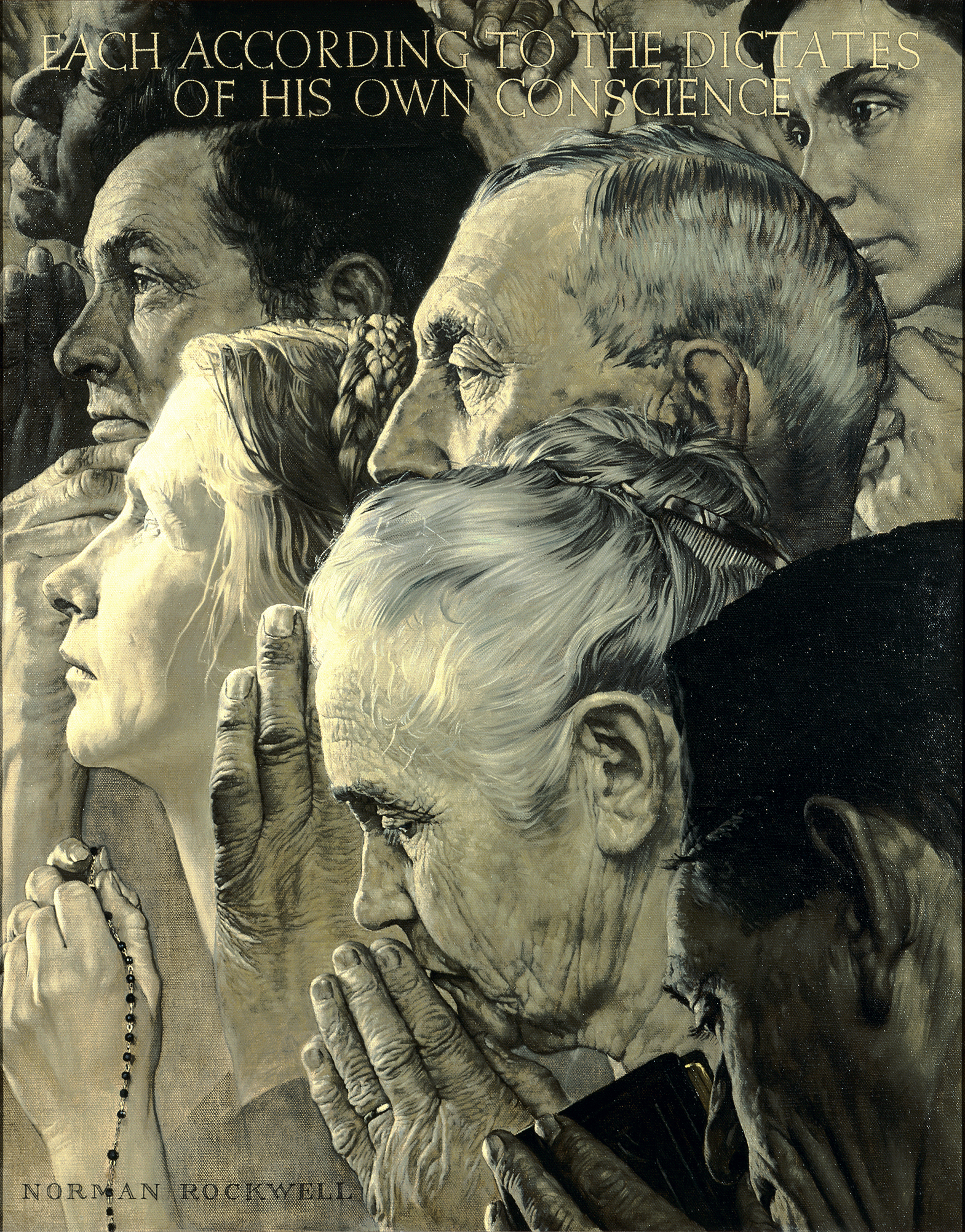
Images are powerful tools. As a person’s mind absorbs an image, it is digested in the heart and eventually bears fruit in the hands. Throughout history, people have been captivated by images and paintings. Artistic images have been used to change societies and impact nations. For instance, it is hard to measure the massive impact Norman Rockwell had on the American people during the Second World War against Adolf Hitler. Thousands of Americans were rallied to the cause of fighting due to his artwork that was published nationwide. Rockwell captured on canvas images of the core American beliefs of freedom. To this day, many Americans feel strong emotions upon seeing and pondering the well known paintings of Freedom of Worship, Freedom of Speech, Freedom from Want and Freedom from Fear. The images Rockwell created were not simply for entertainment or artistic acknowledgement. “The paintings also toured the United States and raised in excess of $130 million toward the war effort.” (Biography of Rockwell) Rockwell intended to changed minds and lives with his imagery.

Just as Rockwell’s art was not neutral in its purpose, the imagery in biblical apocalyptic literature has an agenda. God has specifically chosen the language in the apocalyptic genre in order to stir affections for himself and to spur believer’s on in sanctification. 2 Timothy 3:16 means that all apocalyptic imagery is profitable for training in righteousness in order that the man of God may be equipped for every good work. The task of the biblical counselor is to learn how to properly harness this imagery for the growth of others. In the upcoming weeks, I will post a few practical ways apocalyptic imagery can be used in counseling and personal spiritual growth.

Apocrawho?

Image
by Sean Perron

Apocrawho?

For all those who are curious about the Apocrypha (Perhaps you don’t care about the apocrypha. No worries – you will live and should skip this post) I recently read the book of Enoch and 4 Ezra (often called 2 Esdras) which are not a part of the Protestant Scriptures. This was my first time reading through these books and will probably be my last. My assessment of these Apocryphal books is that they are unnecessary and ultimately dangerous. As I read, I jotted down notes and here are my conclusions.

How many Ezras are there?

There is only one Ezra and he didn’t write this book. Nevertheless, the book of 4 Ezra is an attempt to use the clout behind Ezra’s name to answer profound religious and philosophical questions. The author is portrayed as Ezra and the story is comprised of visions which answer questions posed by the inquisitive prophet. The setting of the book is during the time of Ezra despite the fact that the book was composed sometime between A.D. 70 and the third century.

While I do not address the issue of using a pseudonym (This author is using another person’s name to establish your credibility) in this post, it cannot be fully ignored in the final assessment. Given the reality that so much material is dependent upon the book of Revelation and that 4 Ezra was written after the death of the apostles, there appears to be insurmountable evidence making this book unconvincing and dubious in its message and motivation. Will the real Ezra please stand up?

Pros:

Before giving a critical evaluation of 4 Ezra, it is important to point out several commendable and noteworthy aspects of the book.

1) Literary Features

4 Ezra has several passages that offer vivid imagery and memorable phrases. The book includes well written parables and intricate visions that engage the mind and cause the reader to think critically. Examples of well crafted writing include phrases such as “blood shall trickle out of the wood” (7:19) and “a wave is greater than a drop of water.” (9:16) Perhaps one of the most memorable visions is in chapter 13 which describes the powerful return of the Messiah. The Messiah effortlessly destroys his enemies and the gathers his people by his side. He consumes his foes with fire and lightning and them warmly welcomes all those who have obeyed his commands. This imagery draws the reader in and can make a lasting impression.

2) Real Questions

The book of 4 Ezra is not for shallow thinkers. The narrative is carried along by questions that Ezra asks of God and the angelic beings. Each question is intense and laden with emotion. These questions are helpful in that they relate to real inquiries posed by countless people throughout history. He is concerned about why so many people go to hell and the problem of evil appears to be heavy upon Ezra’s mind. Another one of the most pervasive questions concerns the destruction of the Jewish temple and the concern that God has forsaken his chosen people. These questions are near to the human heart and will continue to exist until the end of time. But the real question is does 4 Ezra answer them correctly?

3) Some Accuracy

4 Ezra contains a handful of theological nuggets that should be commended. In 7:98, the angel states that the highlight of heaven will be beholding the face of God. “The seventh order, which is greater than all those what have been mentioned, is that they will exult boldly, and that they will trust confidently, and rejoice fearlessly, for they hasten to see the face of him who they served in life…” This resonates accurately with the Christian experience and is confirmed by 1 Peter 1:18 and Revelation 22:4. Consequently, the worst aspect of hell will be the glory of God in wrathful judgment. This is pointed out in 7:87 which reads, “they will waste away in shame and be consumed in disgrace, and wither with fear, at seeing the glory of the Most High before whom they sinned while they lived…” 4 Ezra rightly places the emphasis on God’s presence in heaven and hell. Heaven is wonderful because God’s glorious joy is always present and hell is terrible because God’s glorious wrath never leaves.

Related to this issue is the correct teaching that God’s judgment is final. In 7:105 it says, “The Day of Judgment is final and shows to all the stamp of truth.” 4 Ezra does not teach a third afterlife destination or holding place such as purgatory. This aligns correctly with Hebrews 9:27 which teaches that judgment immediately follows death.

Cons:

1) Depends on the Bible

For the avid reader of the Protestant Scriptures, it does not take long to realize that 4 Ezra borrows a lot from the Bible. Verse after verse alludes to the Torah and the book of Job (6:49; 10:33). There are multiple allusions to the Apocalypse of John and the book of Daniel. Several passages in 4 Ezra appear to be snapshots of the book of Revelation with only minute modifications. It was sort of like looking at familiar photos through a sepia filter. Phrases from Revelation such as “Sovereign Lord” and “How Long?” are used repeatedly in the book of Ezra (4:33, 38; 5:23; 6:11, 59; 7:17). Images such as multitudes sealed by God with white robes around the presence of the Lord singing songs with crowns on their heads are clearly adapted straight from Revelation chapters 4-6 (3:36-48). There are also allusions to Jesus’ words from the Olivet Discourse in Matthew 24.

It is curious that 4 Ezra never directly references any of these biblical authors. Only on one occasion in 12:11 is the writer Daniel mentioned but it is not in relation to a quotation. While many biblical authors make allusions to other biblical passages, 4 Ezra is markedly different. 4 Ezra borrows but never gives back. The New Testament authors make allusions while also repeatedly referencing other biblical authors.

2) Differs from the Bible

4 Ezra differs from the Bible in several ways. For instance, the interactions between Ezra and the divine beings are unusual when compared to inspired apocalyptic literature. 4 Ezra focuses on the names of angels and limits Ezra’s interaction with God (4:36). The angels are commanding, harsh and abrasive (7:19). They rebuke Ezra and even deem him worthy or unworthy of revelation. This seems to give them more authority to angels than is appropriate (7:103). It is also concerning that the divine beings make Ezra work for special revelation. On multiple occasions throughout the narrative, the divine beings withhold information from Ezra until he fasts for a certain amount of time or until he completes a task they have requested (6:30; 9:23). These factors are not characteristic of either Old Testament or New Testament apocalyptic literature within the Protestant Scriptures. These factors lend a substantial amount of evidence showing that 4 Ezra does not align with inspired writings.

3) Distorts the Bible

The fact that 4 Ezra borrows from the Bible is not necessarily a flaw by itself. Yet problems arise when 4 Ezra goes beyond what the Bible teaches and even misrepresents historic Christian doctrines. In addition to the unusual interaction with angelic beings, the issue of salvation is very unclear in the book of Ezra.

It appears that the major focus of the book is salvation by works. There are references to the mercy of God and to fearing the Lord, but these are heavily overshadowed by commands and statements of righteousness by works. For instance, the angelic being encourages Ezra that he will be saved “for you have a treasure of works laid up with the Most High, but it will not be shown to you until the last times.” (7:77). Again in the same chapter, the angel says those will be saved who have “carefully served the Most High, though they were in danger every hour, so as to keep the Law of the Lawgiver perfectly.” (7:90) These statements are not balanced out by the saving grace of God (7:167-70; 9:8; 14:34).

An important exchange takes place between Ezra and a being (unknown entity which is either God or an angel). Ezra eventually pleads with the Lord for grace for mankind. In 8:35-36, he states, “For in truth there is no one among those who have grown up who has not sinned. For in this, Lord, your uprightness and goodness will be declared, if you have mercy on those who have no stock of good deeds.” He truly understands the truth of Romans 3:23 that all have sinned and fallen short of the glory of God.

This is part of a deep seated plea for grace and forgiveness for sin. However the response from God is calloused and cold. God responds by saying, “For indeed I will not think about the forming of those who have sinned, or their death or judgment or destruction, but I will rejoice over the fashioning of the upright, over their pilgrimage also, and their salvation and the reward they will receive.” (8:37-40). This response from the divine being in 4 Ezra is not the response of the God from the true Scriptures.

God is just but he also shows unfathomable grace to sinners. There is no salvation apart from his grace alone. 4 Ezra is markedly different than the apocalyptic literature found in the book of Revelation. Revelation 22:17 offers the water of eternal life without price. The multitudes in Revelation gather around the one who has freed them by his own blood and was slain before the foundation of the world. Those who endure to the end in the Revelation 12:11 are only those who place total confidence in the finished work of Jesus.

Final Remarks:

An astute reader will soon realize that 4 Ezra really has nothing to offer. There is nothing groundbreaking that is not found in other passages in the protestant canon. There is nothing new under the sun and there is certainly nothing new in the book of 4 Ezra. This shows the unoriginality of the author and his need to build off inspired Scripture.

The places 4 Ezra deviates from the Scriptures are in more detailed descriptions, intricate visions and distorted doctrine. While there are some positive aspects of 4 Ezra, the ultimate verdict is that it is dangerous. The theology found in this work is unclear at best and heretical at worst.

4 Ezra has some commendable passages that engage the reader to think critically but it has several significant flaws. To put it mildly, the book is unnecessary. To put it bluntly, the book is blasphemous. Renee Jarrett helpfully pointed this out and brought to my mind the passage in Revelation 22:18. “I warn everyone who hears the words of the prophecy of this book: if anyone adds to them, God will add to him the plagues described in this book…” Although unintentional by the mysterious author, the benefit of reading 4 Ezra is seeing its shortcomings and realizing the sufficiency of the Scripture.


Pornography Behind the Pulpit

View this content on Issuu's website
This is an excerpt from the article “Dear Young Seminarians” in the January Issue of the Seminarian Student Magazine of Toronto Baptist Seminary.

Dear Young Seminarians,

I have been around seminary and Bible college long enough to know that some of you are frequently engaged in pornography. My heart is broken by this reality and I wish it were not true. Pornography is a dark sin that can hide even under the shadow of steeples. The pulpit is not immune to the sin of pornography.

There are students who are going to graduate this year who know more about God than the majority of Christians and yet are farther away from Jesus than the average church member. If nothing changes, several of you will receive a diploma for Christian ministry but only proceed to preach a foreign gospel for the rest of your days. If this describes you, I plead with you not to receive the grace of God in vain. There truly is matchless power in Christ to change your life. I am thankful that you are reading this and want you to know that several steps must be taken.

You probably have fears that abound in this season. What if someone finds out? What will my fiancee think? What will my pastor do? How will this affect my marriage? What if I can never be free?

If you are serious about your relationship with the Lord and about your future ministry, then serious action must be taken. You do not want to turn over in bed next to your bride and search for porn on your iPhone. You do not want to stand up to preach just after gazing at naked women the night before. You do not want to shrug off this sin and then turn over in the flames of Hell. Hands must be cut off and eyes must be gouged out. Pornography is not a pet to stroke, but a snake to crush. Realizing the severity of this sin is life or death. Yet there is a greater reality we must realize.

Brothers, many men do not realize the power they have been granted to fight even the darkest desires. When Christ screamed in agony on the wooden tree, He did not scream in vain. The strength that surged through the veins of Jesus now surges through the Spirit in you. Christ has come to set you free and you can be free indeed. There is no porn pit too deep that the light of Christ cannot reach. Christ is risen from the dead and He gives immeasurable power to those who believe (Ephesians 1:19). Come into the light and believe there is power in the precious blood of the Lamb.

I am a seminary student looking at pornography, what should I do?

The first order of business is to bring in a wise counselor. I am not involved enough in your daily life to give hand-tailored advice nor able to hold you accountable. You will need someone who can speak directly into your life, assess the scenario, examine your fruit and help you grow in holiness. You need a referee on the field rather than a commentator from the stands.

But from my aerial viewpoint, here is what I have noticed. There are two kinds of people who struggle with pornography. Those who are are slaves to Jesus and those who are slaves to Satan. Those who have the Holy Spirit in them and those who do not. You must examine yourself and take inventory of your soul. Are you enslaved to pornography and making little to no progress? Or are you struggling but growing in grace and gaining victory? If you are consumed with porn and know it, stopping seminary is the best option – or – at least postponing it until you are able to get adequate help. For the man who is enslaved to porn, ministry is not the answer- Jesus is.

However, if you struggle hard but fall occasionally, quitting seminary might not be the best counsel. In order for you to qualify for ministry, you must be fighting this sin vigorously and see Jesus giving you victory in battle. The pulpit and the pastor are called to be above reproach (1 Timothy 3:2).

Discovering a tumor and excising it is painful and frightening. Yet everyone would trade the short pain of surgery for a cancer free body. Sin thrives in secret. Mold, bacteria, fungus and all manner of porn fester in the dark. True confession may be a brief pain, but it brings sweet relief.  Every broken porn addict who comes to Christ will never be turned away.  He creates a clean heart and renews a right spirit (Psalm 51:10). Confess your sin to God and then confess your sin to a mature Christian leader in your life. God has given us pastors and mentors to help us grow in godliness. They will welcome you with open arms and then hopefully strengthen you in the faith.

“Submit yourselves therefore to God. Resist the devil and he will flee from you. Draw near to God and He will draw near to you. Cleanse your hands you sinners and purify your hearts you double-minded. Be wretched and mourn and weep. Let your laughter be turned to sorrow and your joy to gloom. Humble yourself before the Lord and He will exalt you.” (James 4:7-10)

This is an excerpt from the article “Dear Young Seminarians” in the Seminarian Student Magazine of Toronto Baptist Seminary. You can read the full article along with other helpful articles on Pornography and Purity here

How to Study the Bible

Image
by Sean Perron

I took a hiatus from blogging the past few months and instead have been working through a series on How to Study the Bible. Here is a list of blogs and audio sessions that were given at the Emmaus Student Ministry at Crossing Church. The series concluded last week and covered a wide range of genres and interpretive issues. I have categorized them here in this blog post and hope they can serve you this new year.

How to Study the Bible:

An Unexpected Opportunity

Mom in the Philippines
by Sean Perron

This holiday season I want to encourage you to do the unexpected. My parents have challenged me to look beyond the familiar and consider the hurting church abroad.

Last month, my mom and dad spent a week ministering to children at a local Christian school overseas. This school virtually unknown in my realm of social media and is a part of an organization called ABC. It is a non-denominational ministry organization that has a ministry in the Philippines. The gospel is being preached and children are being touched for the kingdom of Christ.

Just days after my parents left this school, the horrific typhoon Haiyan struck the Philippines. The ABC school and neighborhood was overrun with putrid water and devastating wind. What little these people had available has been further torn and tattered.

My dad was able to contact the ministry facilitator to learn that he has survived. The building is standing but it is in shambles. An estimated $10,000 worth of repairs will be needed to become fully operational again. I have included some pictures of the ministry before the typhoon and after my parents left.

The Filipino church did not expect a hurricane to devastate their region. This unexpected tragedy has brought pain to the body of Christ and cracked open a need for help. Perhaps this holiday season you can be a part of the unexpected and bless fellow believers across the globe. I invite you to both pray and give what you can.

Here is the address where donations can be sent. (Tax deductible)

ABC CHILDRENS AID USA
c/o Maxwell Ditta
2280 Grand Central Parkway #17-2
Orlando, FL 32839

Make check to
ABC CHILDRENS AID USA

Memo – For School Typhoon Damage